
Intellectual property law moves carefully. The legislature consults, drafts, debates, revises. Courts interpret and develop doctrine case by case. The pace is deliberate.
Technology, particularly artificial intelligence, does not move carefully. It moves fast, disrupts quickly, and creates legal questions that the existing frameworks were not designed to answer.
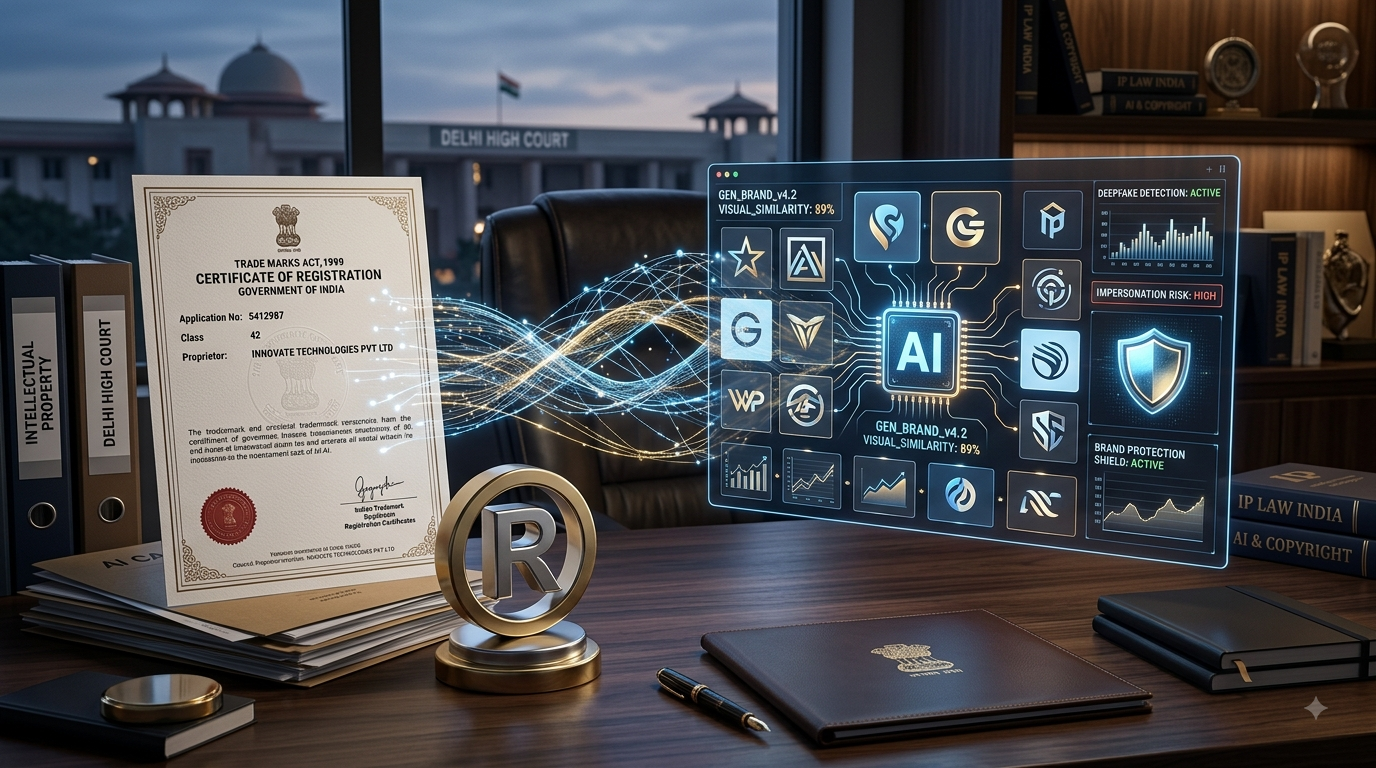
For trademark owners and IP practitioners, the intersection of AI and trademark law is an emerging frontier that raises real, practical issues — today, not in some distant future.
AI-Generated Brand Names and Logos
AI tools now produce logos, brand names, slogans, and visual identities in minutes. This is commercially valuable — brands can iterate through identity options quickly and at low cost.
But it creates a legal grey area. Who owns an AI-generated trademark? Indian trademark law — like most jurisdictions — requires a legal person (individual or entity) to be the registered proprietor of a mark. The AI cannot own the trademark.
The human or company that directs the AI’s output and uses it commercially is the likely owner. But questions around authorship, originality, and the copyright in the underlying design (which feeds into the device mark) remain unsettled.
For brand owners using AI-generated logos: ensure you have clear contractual terms with the AI platform regarding ownership of outputs, and register the mark in your own name without delay.
AI-Powered Brand Attacks: Lookalike Mark Generation
More concerning is the use of AI by bad actors. AI can now systematically generate variations of existing trademarks — dozens, hundreds of alternatives — testing the boundary of where infringement ends and permissible similarity begins.
This creates a new form of brand attack: rather than one copycat, a bad actor can produce an array of marks that individually may not quite meet the “deceptively similar” threshold, but collectively erode the uniqueness of the original brand.
Monitoring is essential. Trademark owners need to watch the register not just for identical marks, but for a pattern of similar filings.
AI in Trademark Examination
On the positive side, AI is enhancing the quality of trademark searching and examination. AI-powered tools can now analyse phonetic similarity, visual similarity, and conceptual similarity with greater sophistication than manual review.
Trademark offices globally — including EUIPO and USPTO — are piloting AI-assisted examination. India’s IP India office is also moving in this direction.
The practical effect for brand owners: the bar for what constitutes a “deceptively similar” mark may be applied more consistently. Both the professional search conducted before filing and the examiner’s review at the Registry level will become more thorough.
Deepfakes and Brand Impersonation
AI-generated deepfakes — realistic synthetic audio and video — can simulate a brand’s advertisements, an endorser’s testimony, or a product demonstration. These can be used to create false impressions of commercial association.
A synthetic video showing a celebrity appearing to endorse a product, using the brand’s visual identity, constitutes a misrepresentation under trademark law — and potentially consumer protection law and criminal law as well. Indian courts have not yet had many AI deepfake trademark cases to adjudicate, but the existing legal principles on misrepresentation are applicable.
Brand owners with high-profile visual identities and spokesperson arrangements need to monitor for deepfake content and build enforcement mechanisms around it.
NFTs and Trademarks
The NFT space has thrown up trademark questions that remain largely unanswered in India. When a creator mints an NFT that incorporates your registered trademark — a digital artwork depicting your product, a collectible using your brand imagery — is that infringement?
US courts have begun grappling with this. Hermès’ successful action against MetaBirkins — NFTs designed to look like Birkin bags — is the leading case. Indian law would likely apply existing trademark principles to reach similar conclusions, but there is no specific framework yet.
For brands operating in the digital collectibles and metaverse space, trademark protection in relevant classes (including Class 9 for digital goods and NFTs) is increasingly important.
What Should Brand Owners Do Right Now?
Register your trademark — and ensure your class coverage includes digital goods and services if relevant to your business. Class 9, 35, 38, and 42 are increasingly important for digital-forward brands.
Implement active monitoring. Automated trademark watch services can flag new filings, domain registrations, and social media accounts that are confusingly similar to your brand.
Include AI governance provisions in brand licensing agreements. If you license your trademark to partners, your agreement should address their use of AI tools in connection with the brand.
Stay close to your IP counsel. The regulatory and case law landscape in this space is moving quickly. Annual IP strategy reviews should now include a digital and AI risk assessment.
The fundamentals of trademark law — distinctiveness, use, registration, enforcement — have not changed. But the environment in which brands operate has changed significantly. Protecting a brand in the age of AI requires the same legal foundations, applied with new awareness and new tools.