
Product design is one of the most commercially undervalued forms of intellectual property in India. Companies invest months and significant resources in developing a distinctive product aesthetic — and then fail to protect it before a competitor copies it.
The Designs Act 2000 exists precisely to prevent this. Here is how it works.
What Design Registration Protects
Section 2(d) of the Designs Act 2000 defines “design” as features of shape, configuration, pattern, ornament, or composition of lines or colours applied to any article — in two or three dimensions — by any industrial process, which in the finished article appeal to and are judged solely by the eye.
The last phrase is critical: judged solely by the eye. Design registration protects aesthetic appeal. If the feature you want to protect is technical — if it makes the product function better or work differently — it falls under patent law, not design law. The two regimes are mutually exclusive for purely functional features.
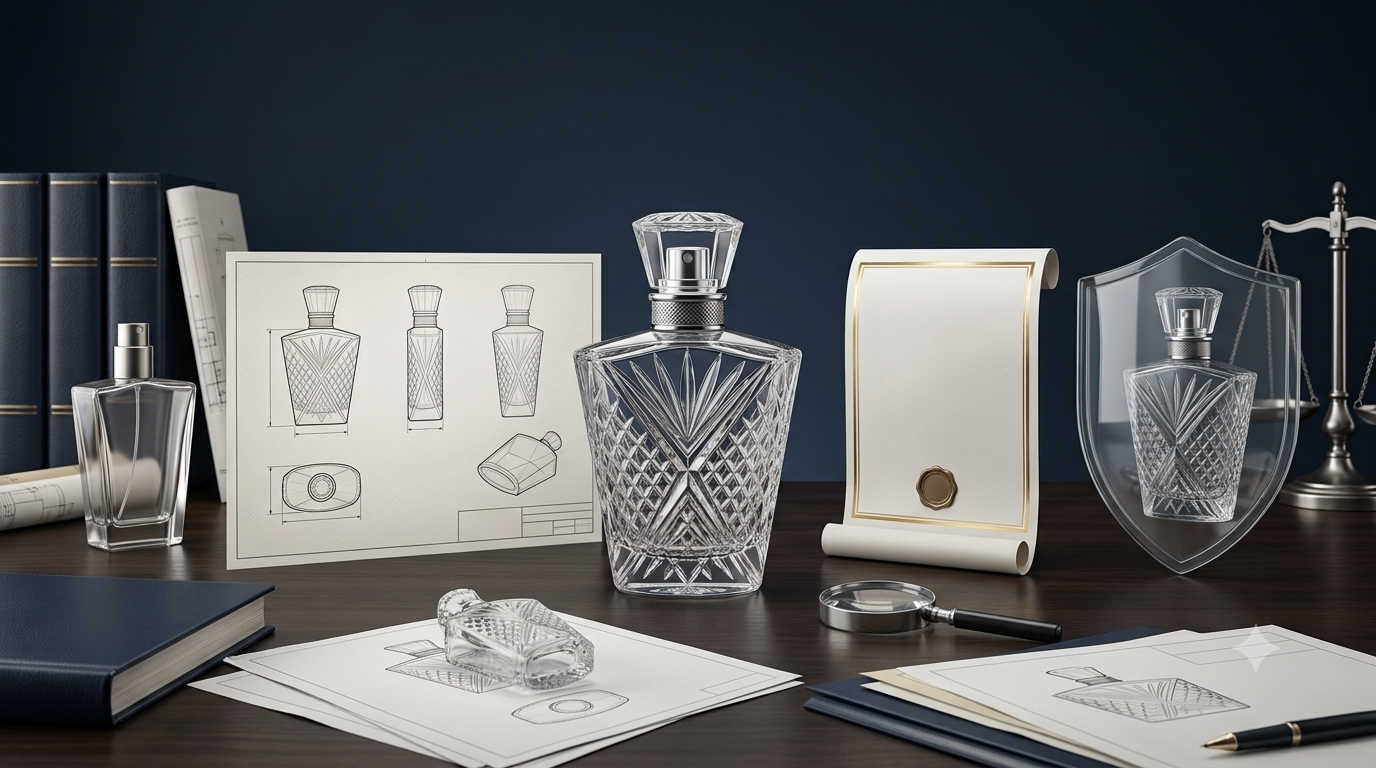
What this means in practice: the distinctive bottle shape of a perfume brand is a design registration candidate. The mechanism that makes the pump work is a patent candidate.
What Can Be Registered
Both two-dimensional designs (surface patterns, printed patterns, colour compositions applied to a product surface) and three-dimensional designs (the shape of a product) are registrable.
Common examples: consumer electronics device chassis, shoe sole patterns, jewellery configurations, packaging bottle shapes, furniture forms, vehicle body components, wearable device profiles.
The design must be novel and original — it must not have been previously published or registered in India or abroad before the date of application. Prior art is global: a product catalogue published in Germany, a trade fair display in Hong Kong, an international design registration — all constitute prior art that can defeat a design registration application or, later, support a cancellation action.
What Cannot Be Registered
Section 4 of the Designs Act excludes designs that are not new or original, designs already published or used in India before the application date, purely artistic works (which are covered by copyright), and designs contrary to public order or morality.
Purely functional designs are also excluded — the test is whether the feature “appeals to and is judged solely by the eye.” If the feature is primarily functional rather than aesthetic, it does not meet the definition.
Duration and Renewal
A registered design is protected for an initial period of 10 years from the date of registration. On application and payment of the renewal fee, protection can be extended for one further period of 5 years.
The maximum term is therefore 15 years. Unlike a trademark, which is renewable indefinitely, a design registration has a hard ceiling. After 15 years, the design enters the public domain and cannot be re-registered.
For products with long commercial lifespans, this limitation is significant. The strategic response is to file a 3D trademark application for the same shape — because a registered trademark is renewable indefinitely and can continue protecting the shape as a source identifier even after the design registration expires.
Infringement
Section 22 of the Designs Act defines infringement as applying a registered design, or a fraudulent or obvious imitation of it, to any article in the registered class, without the licence of the registered proprietor.
Civil remedies include injunction and recovery of damages — with statutory damages of up to ₹25,000 per infringement, subject to a maximum of ₹50,000 per design in any single civil proceeding. Courts can also grant delivery up and destruction of infringing articles.
In practice, design infringement cases frequently involve parallel claims: design infringement under the Designs Act, trademark infringement or passing off (where the design also functions as trade dress), and occasionally copyright infringement. The strongest enforcement position combines all applicable causes of action.
The Three-Layer Protection Strategy
For products where visual appearance is a commercial differentiator, a comprehensive protection strategy uses three layers simultaneously:
Design registration under the Designs Act for immediate visual protection from the date of filing.
3D trademark registration under the Trade Marks Act for the same shape — to provide indefinite protection as a brand identifier after design registration expires.
Copyright in the original artistic work underlying the design — for the design drawings and artistic representations created before industrial application.
Each layer covers a slightly different aspect of the same commercial asset, and together they create a protection structure that is significantly harder to attack than any single registration alone.
The Filing Window
The most important practical point: file before any public disclosure. A product launch, a trade fair, a website image, a crowdfunding campaign — any of these constitutes “publication” that can destroy the novelty of your design and prevent registration.
Design protection rewards those who file first. The time to file is before launch — not after competitors have seen your product and had time to copy it.